Outputs(textual archive), 2025 - ongoing Archive of documentation
Outputs is an archive of thousands of files documenting the translation/interpretation processes and the linguistic and structural analyses of the sound work series Broadcasts.
Broadcasts is a series of sound works developed through an interrupted process of artificial speech generation. An AI model was prompted to generate “voices in conversation.” Rather than allowing the generative process to reach completion, the process was deliberately interrupted at different stages, and the partial generations were recovered. The resulting audio does not contain a recognizable language, nor does it produce sentences that can be consistently attributed to a stable semantic system. What remains are fragments of vocal activity: breaths, phonetic residues, intonations, hesitations, rhythmic patterns and the fluctuating structures of what appears to be conversation. The voice remains recognizable as a voice, while language progressively withdraws from it.

The interruption is therefore not understood as a failure of the system, but as the condition through which another form of linguistic material becomes accessible. By stopping the generative process before it reaches a completed utterance, Broadcasts suspends the moment in which sound is organized into a stable linguistic structure. The voice is caught in a transitional state, somewhere between noise and language, between the production of a sign and the formation of a meaning. What emerges is an artificial grammelot: a vocal structure that preserves some of the formal and rhythmic characteristics of speech without necessarily transmitting a determinate message.

Within this condition, the voice can no longer be considered exclusively as a vehicle for communication. It becomes a material in itself. Its rhythm, duration, frequency, articulation and repetition become perceptible independently from what it might be saying. The distinction between the signifier and the signified is therefore displaced. The sound continues to behave as if it were carrying meaning, while the meaning itself remains inaccessible, unstable or perpetually deferred. The listener is confronted with something that resembles language closely enough to activate the expectation of comprehension, but which repeatedly withdraws from that expectation.

This tension is central to the work. Broadcasts does not simply remove meaning from language; it produces the conditions under which the listener becomes aware of the mechanisms through which meaning is normally constructed. The voice maintains the appearance of communication even when communication cannot be completed. Intonation suggests a question, a response or an affirmation; pauses suggest hesitation; repetitions imply insistence; changes in rhythm create the impression of an unfolding exchange. These elements construct the infrastructure of a conversation without providing its semantic content.

The resulting works were subsequently subjected to a twofold process of analysis. The first consisted of transcribing the musical structure of the voices. Rather than treating the recordings as speech to be translated into textual meaning, this process approaches them as scores. Pitch, rhythm, duration, repetition, pauses and variations become units through which the vocal material can be described. The voice is thus translated from one system of notation into another without necessarily restoring its semantic dimension. What is extracted is not what the voice says, but how it behaves.

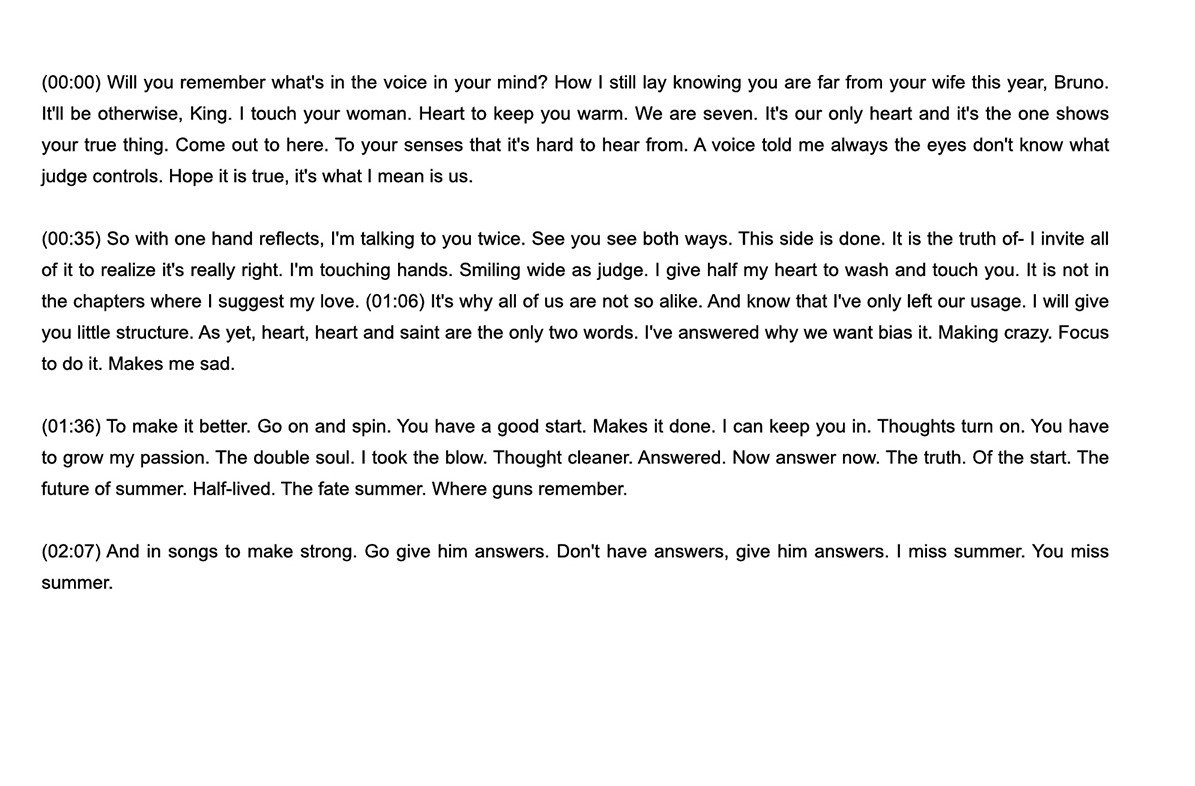
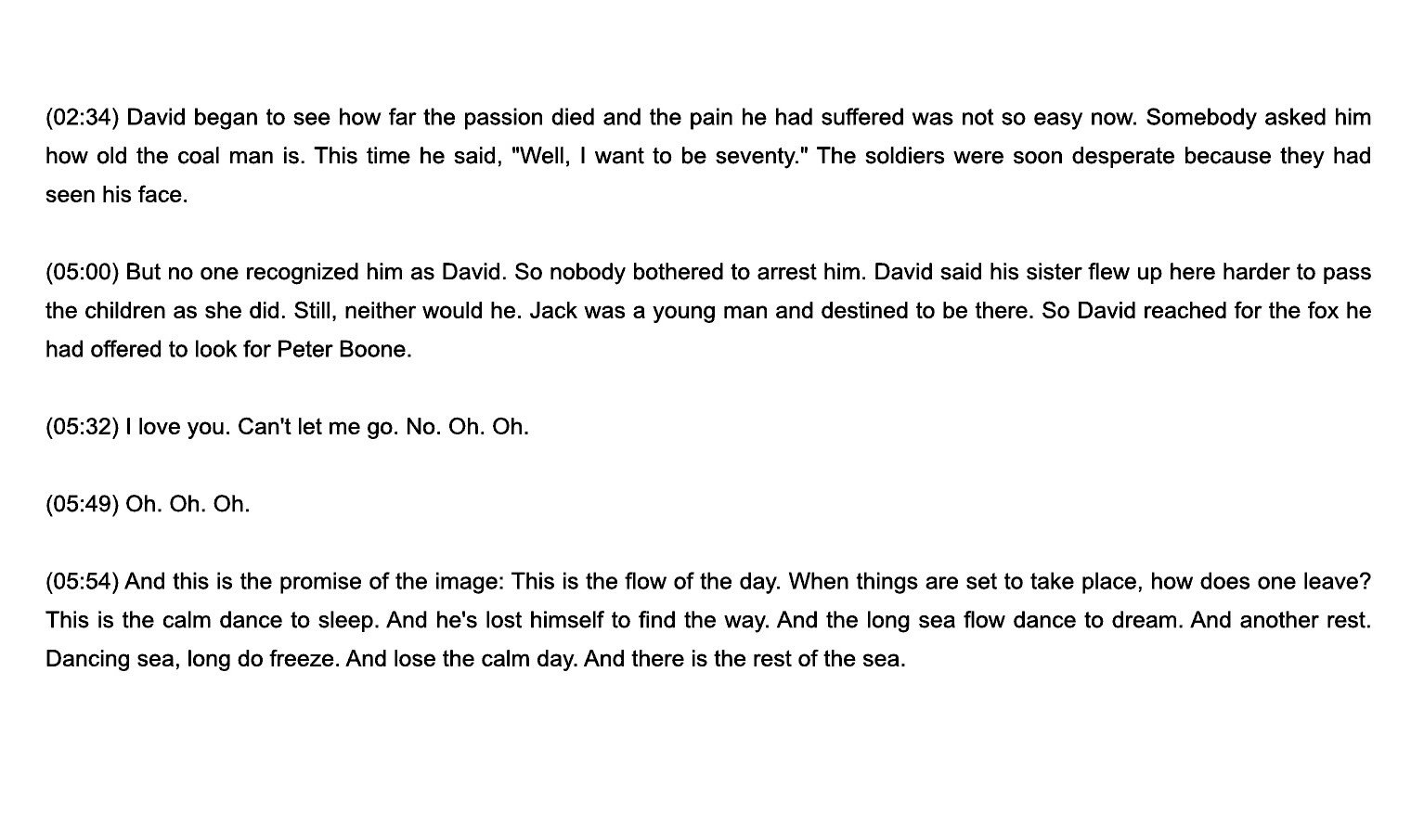
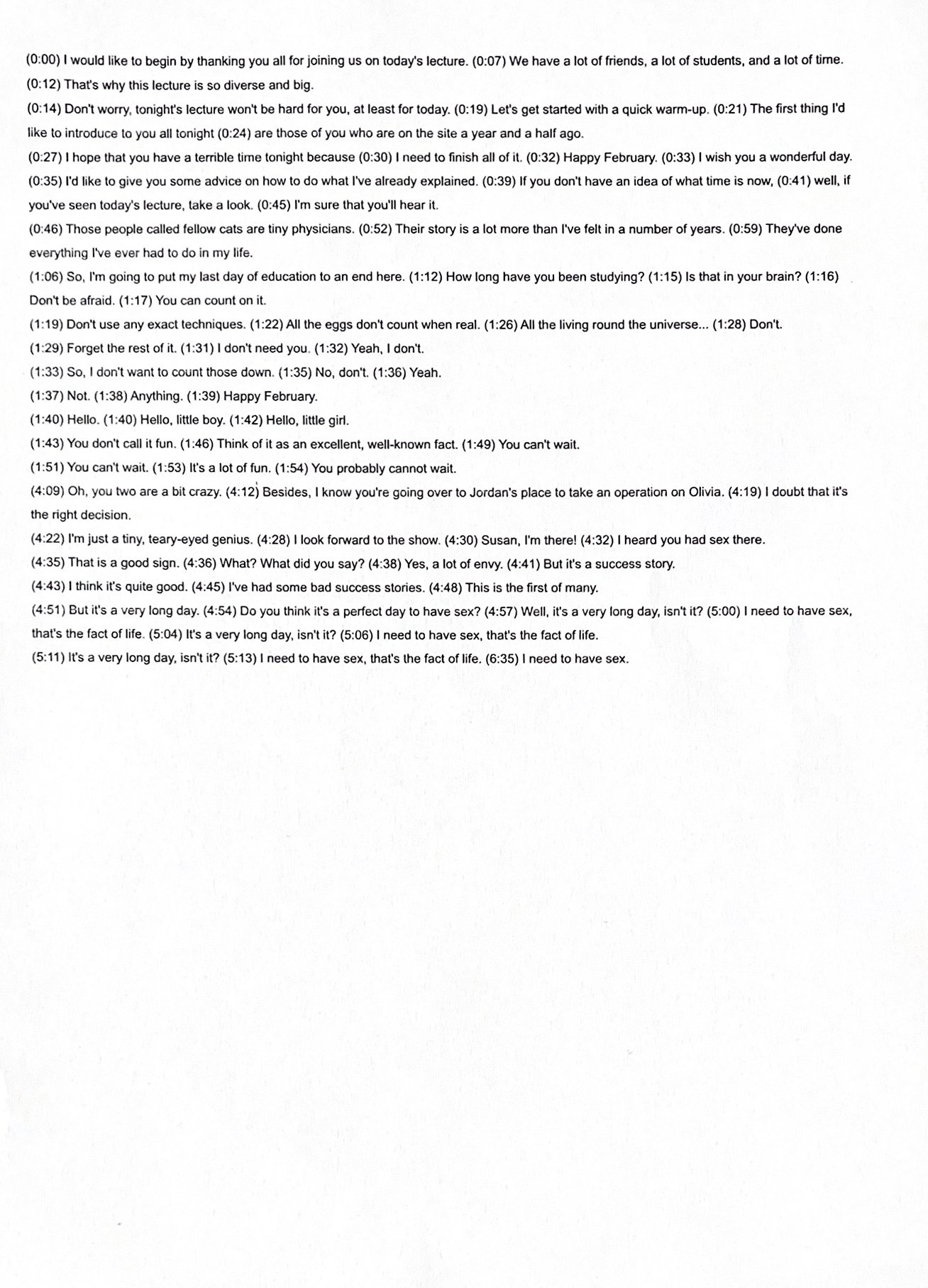
The second process involved the use of speech-to-text software. The software was asked to interpret the same vocal material and to produce an English-language transcription. This introduces another layer of interpretation. Faced with sounds that do not constitute a stable linguistic utterance, the system nevertheless attempts to recognize words, organize phonetic fragments and produce syntactic structures. The resulting texts are therefore not transcripts in the conventional sense. They are interpretations generated by a machine confronted with material that appears linguistic but resists linguistic identification.

This process exposes a peculiar asymmetry between voice and text. The audio contains no stable verbal message, yet the transcription system continuously attempts to produce one. Where the human listener may perceive an ambiguous vocal event, the speech-recognition system searches for lexical units and grammatical relations. It transforms uncertainty into provisional language. The errors, distortions and unexpected formulations produced by this process become part of the work, revealing not only the instability of the original vocal material but also the interpretative mechanisms embedded within systems of recognition.

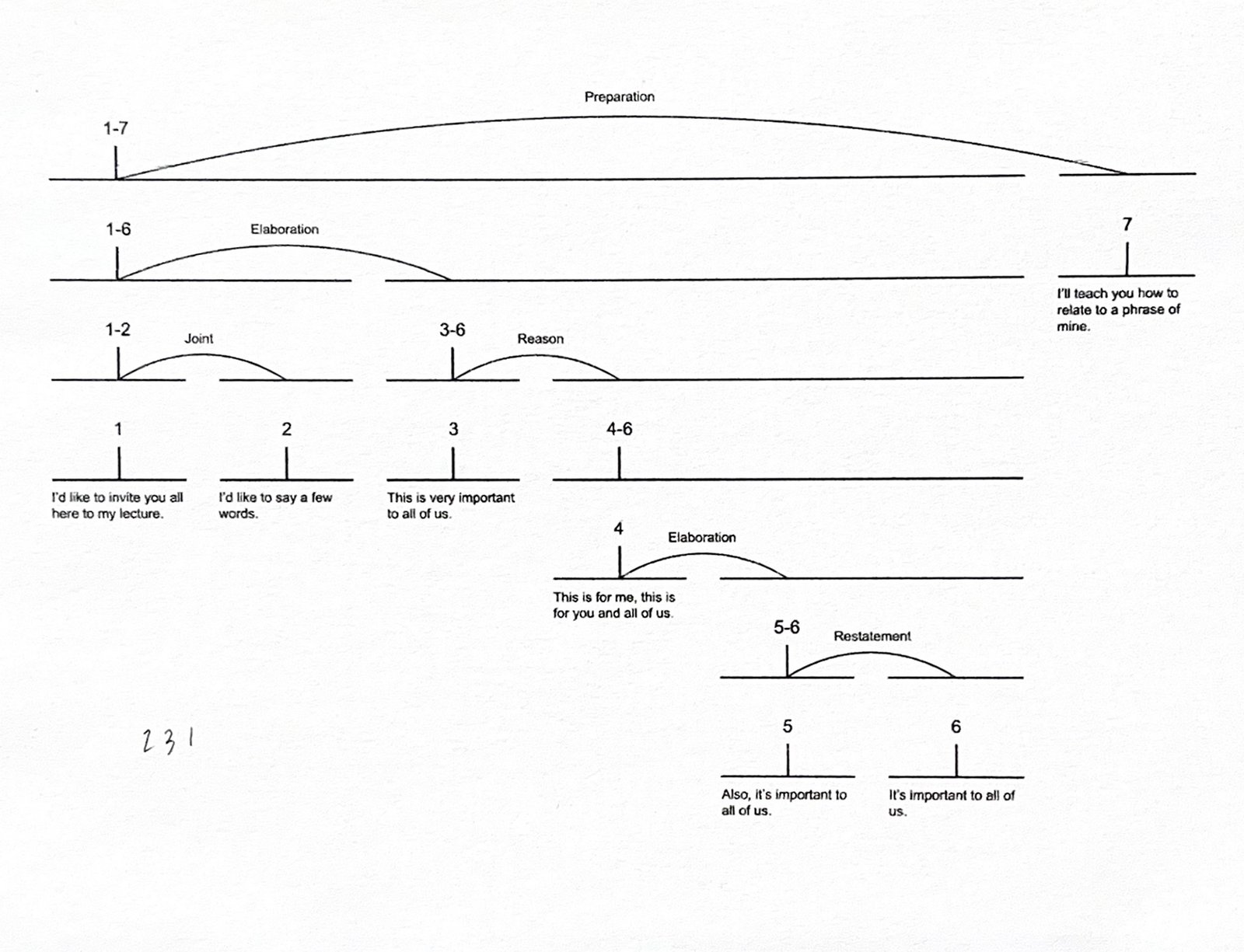
The resulting archive, Outputs, collects these processes of translation and interpretation. It contains the textual and analytical residues produced through the examination of the Broadcasts recordings: transcriptions, interpretations, structural observations and linguistic analyses. Rather than functioning as documentation of the sound works, the archive constitutes a secondary field in which the same material is repeatedly processed, translated and reorganized. Each operation produces a different representation of the voice, without any of them establishing a definitive version.

The archive therefore extends the generative logic of Broadcasts. If the original works emerge from an interrupted AI generation, Outputs emerges from the repeated interpretation of what that interruption has produced. Generation and interpretation become two sides of the same process. In both cases, a system encounters incomplete material and attempts to resolve it. Yet the resolution never becomes final. Every transcription produces another discrepancy; every interpretation introduces another deviation; every attempt to stabilize the material generates a new form of uncertainty.

Language consequently appears not as a transparent medium through which meaning passes, but as an infrastructure composed of procedures, conventions, recognitions and transformations. Before a voice can communicate something, it must pass through a series of operations that distinguish sound from noise, word from non-word, sentence from interruption. Broadcasts isolates this threshold and keeps it open.

The works can therefore be understood as experiments in the materiality of the sign. The voice precedes or exceeds the semantic function usually attributed to it. Its corporeality—its rhythm, texture, pressure, repetition and temporal organization—becomes autonomous from the meaning it is expected to carry. The signifier is no longer subordinated to the signified; it begins to circulate independently, generating relations through sound, rhythm and structure rather than through stable reference.

What remains is a chain of signifiers suspended in an unfinished flow. The voice continually approaches language without fully becoming language. It appears to speak, but never arrives at a definitive statement. It behaves as communication while remaining structurally incomplete. Meaning is therefore not simply absent; it is continuously anticipated, produced as an expectation and immediately displaced.

In this sense, the interruption of the generative process becomes both a technical operation and a conceptual condition. It prevents the voice from arriving at a completed linguistic form and allows the space between vocalization and language to become perceptible. Broadcasts occupies precisely this space: a field in which sound remembers the structure of speech, speech approaches language, and language remains suspended before meaning.